Don’t Get Fooled by Low Ball Bids

It only makes sense to seek several bids when you are considering a remodel project. How else can you tell if if you are getting a fair price?

Right?

Well, not necessarily.

One of the methods a less than scrupulous remodeling contractor may use to make his price more appealing is often referred to as the "low ball bid." Here’s how it works:

Let’s say you’re getting a bid for a basement remodel or an addition. There are many components to the project—excavation, framing, insulation, flooring and finish trim details, closets, plumbing fixtures, electrical wiring and lighting fixtures, paint and wall finish details… you get the picture. Unless you have a very detailed and comprehensive plan that specifies and defines every item that goes into your project the contractor is free to interpret the details himself. The homeowners can go into shock when they start to pick out lighting fixtures only to find that the budget provided by the contractor barely covers a porcelain socket and a sixty watt light bulb. Or to find out that the closets are outfitted with wire shelves, or that the doors are hollow and made of cardboard! The same is true for every item in your project from flooring to the paint on the walls.

There’s no magic way to do it. You need to present the same plan with the same specs to each contractor you want to price your job, or if you ask the builder to submit his own design, you need to make sure that all of the details that are important to you are included. Then you need to compare all of the details of each bid carefully. It is always an advantage to choose as many items as you can ahead of time so that the toilet, sink, or cabinet style you had your heart set on is included in the job cost.

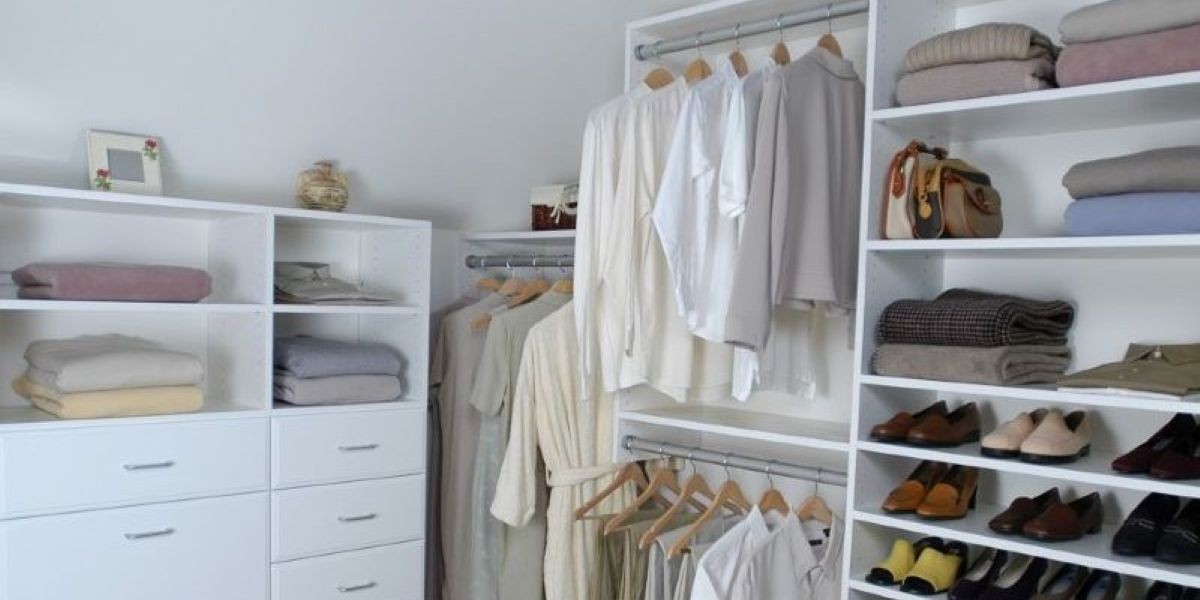
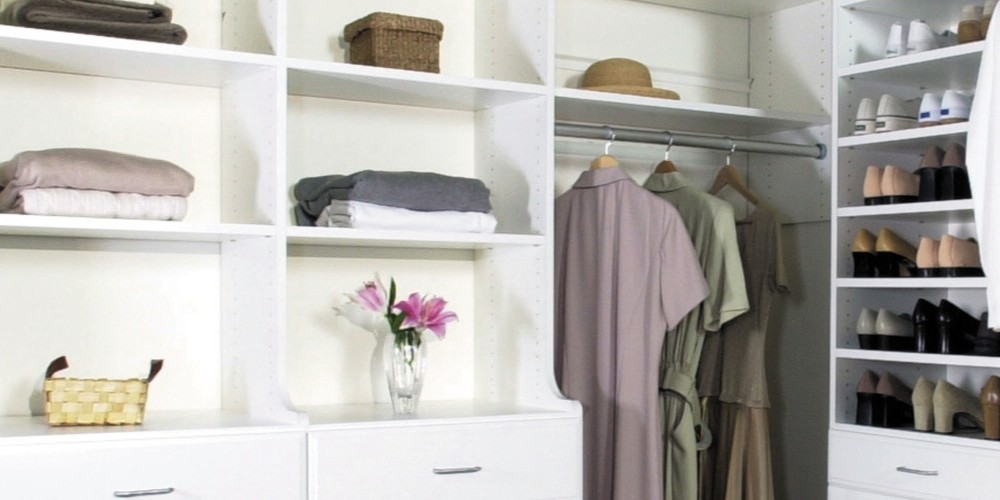
Even on a small remodeling job, like a closet system, there are many opportunities to cut corners. When you compare competing bids from different closet companies are the offerings by each company the same? What’s included in the bid—how many shoe shelves, drawers, accessories like valet poles or belt racks are included; are the shelves in a walk-in closet connected in the corners? Are the bottom corners of the short vertical panels radiused so you don’t crack your head on a sharp edge when you reach in to get your shoes? How about the guarantee and after sale service. What is the company’s policy on follow-up calls to make adjustments when you discover your things don’t fit the way you thought they would. Will the companies guarantee their design?

You’ve heard the expression, "compare apples to apples." Unless you do you are not getting a true picture of the real value of the final product you are buying.

The Oranized Pantry Closet

Five Tips to Keep Your Pantry Organized

A pantry closet is the perfect place to store and organize bulk purchases of non-perishable food items and paper goods. The challenge is in fitting a variety of products that come in so many sizes–cereal boxes, canned goods, baking supplies, paper towels and cases of beverages onto the available shelf space.You want a clear view of the items stored in y
our pantry, and you want everything within easy reach when you’re busy trying to get a meal on the table.
The goal is to maximize the space you have with efficient storage.

Often the shelves of builder installed panrty closets are too deep and are not adjustable, causing a tangled cluster of a mess! You can’t find what you need and it becomes stressful to continually dig through the rubble of your shelves for every item you need to prepare a meal.

There are some simple solutions. With thoughtful planning and design, today’s contemporary closet systems can easily accommodate all of your pantry goods, and save you time and money.

Consider these five tips to help your pantry flow better:

  1. Adjustable shelves: This is an absolute must to efficiently maximize your pantry space. Customize your adjustments for canned goods or cereal boxes and stop wasting space.
  2. Vertical divisions: Even a small pantry will benefit from being divided into separate vertical sections that allow for even more independent options for shelf adjustment. Visit our case studies page to see a before and after pantry with vertical divider and adjustable shelves.
  3. Tray dividers: Tray dividers are an efficient way to store trays, platters, or baking sheets.
  4. Roll out accessories: Roll-out drawers and baskets put pantry items at your finger tips and in clear view. Shallow drawers are a great way to store canned goods, teas, pasta–you name it. No more digging through the stuff on a shelf to see what’s in the back. Pull out a drawer and find it at once.
  5. Use containers with uniform shapes and sizes: Plastic bins or cannisters for pastas, cereals or baking supplies fit efficiently on shelves adjusted for their size and shape and allow you to fit more in your pantry.

Finally, simplify your life by purging any unused or out dated items from your pantry. Limit what you store to those things you need in your kitchen. The key to easy access to your pantry is organization, and having a system will keep you organized.

Closet Planning Guide for Professionals

 Specifications and Tolerances for Contemporary Closet Systems

All of the closets that we remove from homes to replace with contemporary closet systems were originally built by a contractor. A well intentioned builder who tried but failed to provide his client with functional closet fixtures. Many homeowners reach such a high level of frustration with the way their closets function that they arrive at the conclusion that replacement seems like the only option. Cleats and fasteners need to be pried out, holes need to be patched, and walls need to be repainted, and a whole new set of closet components need to be installed. All at considerable to the homeowner, who already paid to have it done the first time.

So what went wrong?

It is not the quality of craftsmanship that’s the problem. Usually the closets we demolish are well built and many times are quite attractive. The issue is with the function: the hanging rods are not properly spaced or the shelves are not adjustable. Or the flow of the overall layout is awkward and difficult to use.

Function is the new standard for closet design.Today’s homeowner doesn’t want his grandmother’s rod and shelf. The busy family of today wants functional storage that’s easy to useSpecifications and Tolerances for Contemporary Closet Design. Retirees are downsizing and demand more efficiency from their storage space. Homeowners are opting for details that offer more value in terms of quality of life.

Yet, even as rising demand and consumer awareness drives this cultural shift in home decor forward, many architects, designers, and builders remain uncertain about how to provide better storage space for their clients.

This guide was create to help professional designers and builders understand how to create more functional closets and storage spaces for their clients.

 Click here to download the Professional’s Guide to Closet Planning


Great Organizing Event Giveaway

by Bill Huntley

Many of us use the start of a new year to to set goals for improving our lives by becoming more organized. In fact, being organized will help save time and money, increase productivity, enhance quality of life and reduce stress.

Although everyone understands the benefits of being organized, it’s hard to know how to start. How about starting with the GREAT ORGANIZING EVENT GIVEAWAY.

Great Organizing EventClosetPlace is participating in a 1st ever national event for the organizing industry and I need your help!  My friend Stephanie Calahan is coordinating a huge online event to celebrate "National Get Organized Month" called the GREAT ORGANIZING GIVEAWAY. Participants will be able to get e-books, audio downloads, tip sheets, complementary consultations, software samples and way more. You’ll find free stuff offered by organizing businesses from all over the country,and of course some free stuff from ClosetPlace too!

Click on this link to check it out. And be sure to pass this information along to your friends.

Oh, one more tip to help you get organized–get your free consult from the experts at ClosetPlace.


Custom Closet Design: Making the most of Your Space

The explosion of the custom closet revolution in the past ten years has radically changed our expectations for the function, efficiency and aesthetic quality of our homes’ storage spaces. This progression from simple wooden rods to walk-in closets outfitted with beautiful furnishings has produced a dramatic effect on our approach to home decor as well. One example is the trend in many homes is to claim the floor space once occupied by the traditional his and hers dressers to create a sitting area. Drawer space then takes the form of built-in hutches inside the master closet. Accessories such as built-in hampers, pants racks, tie and belt racks, and built-in ironing boards, to name a few, have impacted not just the bedroom closet, but the way we design cabinetry for laundry rooms, pantries, and even our garages.

Yet, even as rising demand drives this cultural shift in home decor forward, many architects and builders remain stubbornly disconnected from customer preferences with a sort of horse and buggy mindset. Rather than creating spaces that are integrated into the contemporary lifestyles of today’s families, the closets designed into many homes seem like an afterthought. This is seen in homes with closets stuffed under sloped ceilings or built with walls at odd angles that defy the adaption of any sort of organization system. The other pitfall is the builder designed and built closet. Many of these boast beautiful woodwork, but are a constant source of frustration to the homeowner who has to live with shelves that aren’t adjustable or hanging rods fixed at the wrong height. Sadly many homeowners become so frustrated that they opt to rip out closets that may have initially cost several thousand dollars in order to install functional closet systems that enhance their lives.

I first noticed this emotional distress over disorganized closets twenty years ago when I was hired to build an addition onto a home in order to create more closet space. Before finalizing the rods and shelves, my client and I spent a week measuring clothing, drawing designs and marking layout lines on her walls. Of course today we have computer design programs, established industry design standards and a closet design system capable of using every square inch of available space. The whole process is so much easier.

It is puzzling to me that so many architects and builders refuse to adapt this set of design standards for the closets they provide their clients, or to hire a professional closet designer to consult on their projects. Would a builder alter accepted kitchen design standards? Not if he expected to have the appliances match the counter top height or the sink to fit properly. Yet I have heard more than one builder say, "It’s just a closet." Tell that to the new homeowner who needs to spend thousands to remodel the interior of a two year old home because her blouses drag on the floor because the rod is installed too low.

The busy family of today wants closets that compliment the flow of their day–-getting ready for work, putting away the folded laundry and dry cleaning, or getting ready for bed. Empty-nesters are downsizing and looking for more efficient storage space in their homes. Increasingly homeowners are opting for more quality rather than quantity of space in their homes. They realize that paying attention to the details ultimately offers more value in return on investment and in quality of life.

Use these ten tips to help you optimize the value of the closets in your home:

  1. Wall space: Unlike a rod suspended between two walls, today’s closet systems require adequate wall space. Most systems mount directly to wall studs and function best with 84" of wall height and minimally require 46" of height to accommodate hanging clothing.
  2. Avoid angle walls: Angled wall may create interesting lines and focal points in large open spaces, but become incredibly inefficient inside a closet. Closet systems take the shape of rectangles and square corners. This is especially true for reach-in closets. The angled walls are totally wasted space because it is impossible for an angled shelf to maintain adjustability.
  3. Adjustable shelves: Shoes fit in a six-inch high space while sweaters need more like ten or twelve inches of height. Think of a cereal box compared to a can of tomatoes. Having adjustable, rather than fixed shelves attached to cleats, gives you the freedom to fit your space to your needs. Your closet will be more efficient and stay neater.
  4. Correct rod height: This is a source of frequent homeowner complaints. Rods are installed at various heights to accommodate different clothing items. Double hanging: A recommended upper closet rod height of 80 1/4", and a lower height of 39 1/4" (allows hanging of most shirts, folded pants, suits, blouses, jackets and blazers). Short hanging: A recommended closet rod height of 39 1/4" (like double hanging units, these are for most shirts, folded pants, suits, blouses, jackets and blazers). Medium hanging: A recommended closet rod height of 45 1/4", for a unit with 48" verticals (accommodates long skirts, and pants hung by the cuff). Tall hanging: A recommended height of 65” (allows for hanging of long dresses, coats, and robes)
  5. Use closet accessories to enhance function and convenience: Built-in accessory items like roll-out baskets, hampers, jewelry trays, and drawer dividers assign a specific function to a specific place in your closet. This makes it easier to put things away and keep items where they belong. Like the old adage: A place for everything and…
  6. Avoid overly wide shelves: Limit shelves to a width that accommodates two folded items side by side. Stacks of clothing in overly wide spaces tend to fall into oneanother.
  7. Avoid drawers that are too deep: Gauge drawer depth to the items you want to store. Sweaters and and lingerie will fit differently into a contained space. Overly deep drawers tend to become tangled pits that we pore through every time we’re looking for something.
  8. Avoid deep shelves: Like deep drawers, overly deep shelves tend to chaos and make it difficult to find what we want. A shelf needs to be no wider than your folded garment. Standard closet shelves are best at 14" deep. For bulky towels and blankets, no more than 19".
  9. Provide adequate lighting: There is nothing more frustrating than a dark closet. Fluorescent lighting is standard in closets because it offers good lighting and meets code requirements more reasdily. Decorative lighting has more electrical code restrictions and often creates shadow.
  10. Door swing: Doors and light switch locations are often overlooked details. A door that swings into a walk-in may get in the way of  reaching for clothing. Whenever possible, swing a walk-in closet door out into the bedroom. Light switches should be placed on the outside as well to avoid interference with closet fixtures. For reach-in closets, the best door choice gives you the most open reach into your closet. Avoid deep returns at the sides and size the door(s) as wide as possible.

 Getting the most out of your home’s closets, pantry, home office, laundry room and garage requires some planning. Inventory what you need to store and think of how you use your space. If you’re in the process of builing or remodeling your home, don’t take it for granted that your builder will know what’s best for you. Get involved.


Reach-in Closets

Maple reach-in PantryMost of us remember reach-in closets with only a single rod and shelf. The kind of closet in your bedroom or entry that would inevitably degenerate into a chaotic tangle: hangers jammed together, folded clothing stacked to the ceiling on the single shelf, the floor piled with rubble like a landfill.  

Fortunately, that style of closet is a relic of the past. Today’s closet systems simplify storage for any reach-in. Designs can be tailored for each specific type of closet to maximize every square inch of space. Add accessories like hutches, roll-out baskets, hampers, jewelry trays, or wine racks, and your pantry, linen, mudroom, entry, or bedroom closet is transformed into White farmhouse pantrya beautifuly organized niche.

As important to the function of your reach-in closet as the design of the components within is the style of the door. The wrong door can make even the best organized closet difficult to use. Often you are stuck with the door your builder chose for you, and he may not have imagined the same use for the closet that you do.

One point stands out when considering our home’s storage spaces—storage space is valuable. It seems like here are never enough closets or that the ones we have don’t work the way we’d like. The key to organized reach-in closets is well considered design and planning

Five Tips for an Organized Closet

 Battling Closet Chaos

The chaos principle of closet management is a relentless force that is never at rest. It works something like this : You get busy with your life, and then one day you wake up and your closet is like scrambled eggs. What happens in between is one of those cosmic mysteries. Next time you’re getting ready to hoe out your closet to restore order, here’s some tips to keep in mind.

  1. Adjustability is the key to efficient storage: Shoes fit in a six-inch high space while sweaters need more like ten or twelve inches of height. Think of a cereal box compared to a can of tomatoes. Having adjustable, rather than fixed shelves attached to cleats, gives you the freedom to fit your space to your needs. Your closet will be more efficient and stay neater.
  2. Use closet accessories to enhance function and convenience: Built-in accessory items like roll-out baskets, hampers, jewelry trays, and drawer dividers assign a specific function to a specific place in your closet. This makes it easier to put things away and keep items where they belong. Like the old addage: A place for everything and… 
  3. Stack folded clothing no more than three items high so that stacks don’t tip over and become unruly piles.
  4. Use shelf-dividers to keep folded stacks neat: This is helpful for extra long shelves where things tend to run together and drift into chaos.
  5. Purge your closet at least once a year: Get rid of stuff that doesn’t fit or is too worn to wear. It’s surprising to find how much is in our closets we can live without when we take a closer look. More breathing room will give you more control of your space.

The Value of Your Closet: Cost Per Use

by Bill Huntley

I heard an interview piece on NH Public Radio recently discussing the true value of the things we spend our money on. One example used was a blouse that cost $50. If you wear that blouse once then the cost per use is $50. Not a lot of value for your money if you’re on a budget. If you wear the blouse 500 times then your cost of use goes down to one cent. This obviously gives the item more value for your cost.

Looking at value vs. cost from this perspective got me thinking about the true value of a custom closet. According to a recent survey of closet companies conducted by the industry publication Closets Magazine, the average cost of a master bedroom closet installed in 2008 was $2,947.

Not a low cost item, but ask yourself how often you use your closet. Something like two or three times a day. Everyday—year in and year out.

Let’s say you live in your house for at least ten years. I’ve lived in mine for fourteen. Using that average cost figure from the survey, $2,947, the cost for a  custom closet would come out to about 82 cents per day. Probably a whole lot less than you might spend on coffee or snacks or lose in the sofa cushions in a day! Think about that in the context of your present closet.

Is your present closet a cramped nightmare? Do you have trouble finding what you want every morning? Do you dread putting your laundry away?

Would it be worth 82 cents a day to have the convenience of a functional custom closet?


Does Danger Loom in Your Closet Lighting

Closet Lighting Must Follow National Electrical Codes 

by Bill Huntley

I was completing the installation of some closet doors last week when my partner Denise said, "Hey, what’s all that smoke?"

My response was, "Huh, smoke?" How the heck could screwing hardware to a closet make smoke?

The doors are at the upper shelf of the closet and hinged at the top so that they swing up close to the ceiling. I was in the process of installing the support arm that would hold the door in the open position. When I lowered the door the painted finish was smoldering and smoking! 

A little research informed me that both the type and placement of these light fixtures are not in compliance with electrical codes. The lighting in this closet consists of two rows of recessed halogen lights placed about two feet away from the walls. The bulbs were uncovered. Absolutnon-conforming uncovered recessed halogen light in closetely not allowed! No bare incandescent lighting fixtures are allowed in clothes closets. Covered incandescent fixtures are allowed, but a twelve inch clearance is required between the light and shelving. Since our shelves are nineteen inches deep, the light was barely five inches from the closet unit, and with the 15" door open. . .well, close enough to catch it on fire. Halogens get very hot which is why cooler burning fluorescent lighting is more often the choice for closets.

The thing is, there was no lighting yet installed in this closet when we measured and installed the shelves and verticals. The home was near completion with some details lagging behind. The lighting was only in place two weeks later when we returned to install the custom doors. And, while the contractor had the plans in hand for weeks prior to our arrival, I’m willing to bet he never shared it with the electrician.

We have never encountered non-compliant lighting in new construction before, but in older homes, bare bulbs in closets are not uncommon. This recent experience has opened my eyes to the danger of bare light bulbs.  The electricians of the past I’m sure never imagined the way today’s closet systems can fit into spaces and the demand of homeowners to maximize every bit of space.

My advice to all is to check with your local code officer or fire department if you have any questions about the safety of your existing closet lighting. The same is true if you are choosing lighting for your new home or remodel. If you do have any old-time bare-bulb fixtures in your existing closets consider calling an electrician to change them to an approved fixture.  

Closet Doors: The First Step to a Functional Closet

Imagine you need something in your walk-in closet. The door swings into the closet and what you need is on the wall behind the door, so now you have to close yourself into this small room to get the door out of the way so you can reach what you want. Feel cramped?

Or, you’re wrestling with the bifold doors on your reach-in closet and when you finally get them open the darn things are in the way and you can hardly see into the corner, let alone reach around them to get what you need. You’d like to squash the door flat into the jamb to get it out of your way–which is probably the reason it doesn’t work so smoothly anymore!

Sound familiar.

The wrong door can make even the best organized closet difficult to use. The key to choosing the right door is to consider how the style and swing of the door impacts your access to the clothing in your closet. The door style is often chosen by the builder who may not be thinking about the details of your closet system in the rush to complete a new home. If you are building or remodeling, think carefully about your closet doors in the planning stages. And if you are stuck with a less than ideal closet door,  it’s not hard to install a new door. Most doors, regardless of their style fit in the same size rough opening. It may be worth the expense to eliminate a daily source of aggravation by changing your door style.

Here are some tips to think about when choosing your closet doors. You can find more about doors and closet planning in our Closet Planning Guide.

Walk-in Closets: It is important to consider the door swing in a walk-in closet. Unless the closet is fairly large, it is best to have the door swing out into the room rather than into the closet. A door that opens into a small walk-in may block access to items, requiring you to close yourself into the closet to get to your clothing on the wall behind the door. An in swinging door may also limit how much of the closet space is usable for shelves and hanging. An out-swing door may be left open allowing for free access to all shelves and may also let in some natural light.

Pocket doors are great for a walk-in. You won’t have any space restricted on any walls because of door swing. The downside is that they can be a pain to adjust or repair if they don’t slide properly. Don’t scrimp on the hardware.

Reach-in Closets:  Whether it’s a closet for clothing, pantry, linens or utility, the type of door you use can have a tremendous impact on accessibility to what’s inside. There are pros and cons to every door style. Choose the one that offers the best use of space and the least amount of compromise to accessibility.

  • Double out-swing doors (like French doors): This is the best choice for closet accessibility provided you have the space in the room for the doors to swing. There is nothing to obstruct your view or your reach at the jambs. Another real plus is that this style of door will not have the operating issues that bifolds and sliding doors do.  Hinged doors work flawlessly for years and years, and are easily repaired if a problem occurs.
  • Bifold Doors: Bifolds can often solve a space problem when your closet is in a tight spot with no room for swinging doors. The downside is that they take up 8" to 10" of space at the jamb when folded open, possibly obstructing access to the inside corners of your reachin closet. Probably the most common complaint I hear about closet doors when consulting in client’s homes is that their bifold closet doors are broken or difficult to operate.
  • By-pass Sliding Doors: Like bifolds, sliders solve a space problem when there’s no room to swing a door. The disadvantage is that you can only access one half of your closet at one time. Then you need to slide both doors out of the way to access the other half. Somewhat of a chore. This can be a  challenge when designing closet components. You try to group similar items on each side of the divide, like clothing on one side and shoes and accessory items on the other. Sliding doors are also prone to problems like coming off the track or binding so they are hard to slide. Proper installation is the key to fewer operational problems.

When bringing design elements together in a building or remodeling project things often don’t mesh the way we like. Compromise is always a part of a project. The trick is to thoughtfully evaluate all of the possibilities and then to choose the best option available.

« Previous Entries


ClosetPlace
603 569-5609 // consult@closetplace.com
Showroom: 36 Center Street, Wolfeboro, NH 03894

Copyright © 2008 - ClosetPlace - All rights reserved

follow me on Twitter